
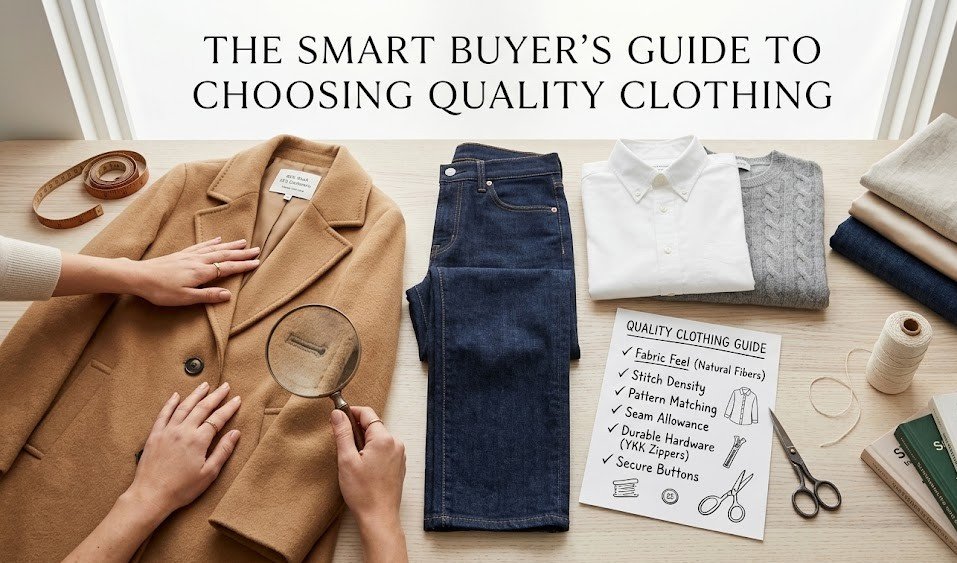
The Fast Fashion Hangover
We’ve all been there. You see a cute top online, the price is a total steal, and you hit “buy” faster than you can say “free shipping.” Then it arrives. It’s thin, the threads are already unraveling, and after one wash, it looks like a sad rag. It’s frustrating, right? We’re tired of spending hard-earned cash on clothes that don’t even last a season.
That’s why I’m giving you the ultimate guide to choosing quality clothing. We’re going back to basics. Shopping shouldn’t feel like a gamble. You deserve pieces that feel good on your skin and stay in your closet for years. It’s about being a smarter, more grounded consumer. Let’s stop the cycle of disposable fashion and start building a wardrobe that actually supports your life.
1. The Fabric Foundation: Natural vs. Synthetic
Why Natural Fibers Win
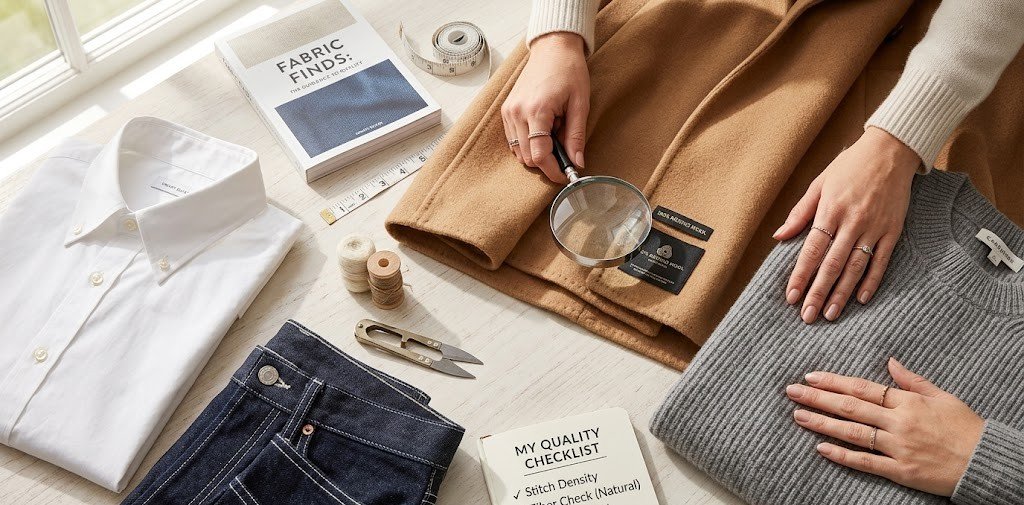
The very first step in any guide to choosing quality clothing is checking the care tag. You want to see natural fibers. We’re talking cotton, linen, silk, wool, and cashmere. These materials breathe. They regulate your body temperature. Most importantly, they age gracefully. Synthetic fibers like polyester and acrylic are essentially plastic. They trap heat, they smell faster, and they pill almost instantly.
The Blend Exception
Now, don’t get me wrong. A little bit of synthetic isn’t always a dealbreaker. Sometimes a touch of elastane (spandex) helps jeans hold their shape. A bit of nylon can make wool more durable. But if the tag says 100% polyester and the price is high, put it back. You aren’t paying for quality; you’re paying for a brand name. Aim for at least 80% natural fibers whenever possible.
2. The Pull Test: Checking for Elasticity and Recovery
The 5-Second Quality Check
Quality garments should have “memory.” This means if you stretch the fabric gently, it should snap back to its original shape immediately. This is a vital part of my guide to choosing quality clothing. If you pull on a sweater or a pair of leggings and the fabric stays stretched out or looks distorted, it’s a sign of poor construction.
Why Recovery Matters
Think about your knees and elbows. If a fabric has poor recovery, you’ll end up with those baggy “knees” in your pants by lunchtime. Low-quality knits are the biggest offenders here. Always give the fabric a little tug in the fitting room. If it feels flimsy or stays limp, it won’t survive a full day of wear, let alone a trip through the washing machine.
3. Examining Seams and Stitching Density
Look Closer at the Lines
Turn the garment inside out. Seriously, do it. The inside of a piece tells you more than the outside ever will. High-quality clothing has straight, even seams. If the stitching looks wobbly or if there are loose threads hanging everywhere, it’s a red flag. A proper guide to choosing quality clothing must emphasize stitch density.
Count the Stitches
In general, more stitches per inch mean a stronger, more durable seam. Cheap clothes use long, loose stitches because they are faster and cheaper to produce. But those loose stitches are prone to popping. Check the “stress points” like underarms and crotch seams. They should be reinforced. If you see daylight through the stitches when you pull the seam, walk away.
4. Buttonholes and Fasteners: The Devil in the Details
Don’t Overlook the Small Stuff
You can tell a lot about a brand by their buttons. Are they plastic and wobbly? Or are they made of wood, horn, or mother-of-pearl? In this guide to choosing quality clothing, we look for buttons that are sewn on securely with a “shank” (a little neck of thread) that allows the button to sit perfectly in the hole without pulling the fabric.
The Buttonhole Finish
Check the buttonholes themselves. They should be densely stitched with no frayed edges. If the hole looks like a messy slit in the fabric, the garment won’t last. Also, look for an extra button sewn into the side seam. Quality brands expect you to keep the piece long enough to eventually need a spare.
5. The Transparency Test: Checking Fabric Weight
Hold It Up to the Light
This is the easiest trick in the book. Hold the garment up to a light source. If you can see the outline of your hand clearly through a fabric that isn’t supposed to be sheer, it’s too thin. A key rule in our guide to choosing quality clothing is that density equals durability.
Why Thin Isn’t Always Cool
A lot of fast-fashion brands sell “lightweight” tees that are really just low-thread-count cotton. These pieces develop tiny holes near the belt line almost instantly. Even summer clothes like linen should feel substantial. You want fabric that has enough weight to drape beautifully over your body rather than clinging to every lump and bump.
6. Pattern Matching: A Sign of High-End Production
Check the Side Seams
If you’re buying something with stripes, plaids, or a loud print, look at where the pieces meet at the seams. Do the stripes line up? In a cheap factory, they just cut the fabric as fast as possible to save money. But a quality manufacturer takes the time to align the patterns.
The Professional Look
Pattern matching requires more fabric and more time. This is why it’s a hallmark of a great guide to choosing quality clothing. When stripes don’t match, the garment looks chaotic and cheap. When they do match, it creates a seamless, polished look that screams “high-end,” even if you didn’t pay a designer price.
7. Lining and Internal Finishing
The Hidden Layer
A lining isn’t just an extra layer of fabric; it’s a sign of a well-made piece. Coats, blazers, and skirts should usually be lined. The lining protects the outer fabric from body oils and helps the garment slide on easily. It’s a non-negotiable for anyone following a guide to choosing quality clothing.
Quality of the Lining
Check what the lining is made of. Cheap brands use itchy polyester. Quality brands use Bemberg, rayon, or silk. Also, look for “French seams” or “bound seams” on unlined pieces. This means the raw edges are tucked away and sewn down so they can’t fray. It’s the “Gracie” way of ensuring your clothes look as good on the inside as the outside.
8. Hemlines and Seam Allowances
Is There Room to Grow?
Quality clothing usually comes with a generous seam allowance that’s the extra fabric inside the seam. Why? So the garment can be tailored. If you find a perfect pair of pants but they’re slightly too tight in the hips, a quality pair can be “let out.” Cheap clothes have almost no extra fabric inside.
The Hem Weight
Check the hem at the bottom of a skirt or trousers. A quality hem is usually at least an inch deep and often has a “blind” stitch, meaning you can’t see the thread from the outside. A deep hem provides weight, which helps the garment hang straight. If the hem is just a tiny, narrow zig-zag stitch, it’s a sign of a budget-cutting manufacturer.
9. Identifying Quality Zippers and Hardware
The Smooth Slide
Zippers should be a priority in your guide to choosing quality clothing. A zipper that catches, sticks, or feels like it’s made of sharp plastic is a disaster waiting to happen. Look for metal zippers, specifically those from reputable brands like YKK.
Hardware Finish
Check the snaps, buckles, and rivets. They should feel heavy and cold to the touch (indicating metal, not plastic). The finish should be even, with no chipping or “cheap” yellow-gold tint. If the hardware feels light and “clinky,” it will probably break or tarnish within a few months.
10. The Wrinkle Test: Real-Time Quality Checking
The Fitting Room Squeeze
Before you head to the register, grab a handful of the fabric and squeeze it tight for about five seconds. Let it go. Does it stay a crumpled mess? Or do the wrinkles fall out quickly? This is a practical test for any guide to choosing quality clothing.
Living with the Fabric
While some fabrics like linen are meant to wrinkle, a high-quality cotton or wool should resist permanent creasing. If a shirt looks like an accordion after five seconds in your hand, imagine what it will look like after an hour of sitting at a desk. You want clothes that stay looking crisp throughout the day.
11. Understanding Brand Reputation vs. Quality
Don’t Be Blinded by the Logo
Just because something is expensive doesn’t mean it’s high-quality. In recent years, even luxury brands have started cutting corners. My guide to choosing quality clothing teaches you to look at the garment, not the label. Sometimes a mid-range, “boring” brand produces better-constructed clothes than a trendy designer house.
Research and Reviews
Check the “about” page of a brand. Do they talk about their mills? Their sourcing? Their construction methods? Brands that are proud of their quality will tell you about it. Look for “full-grain” leather, “long-staple” cotton, and “hand-finished” details. These are the keywords of a smart buyer.
12. Maintenance: Caring for Your High-Quality Finds
Protect Your Investment
Once you’ve used this guide to choosing quality clothing to find the perfect pieces, you have to keep them that way. Most quality items should not be blasted in a hot dryer. Heat is the enemy of natural fibers. It breaks down the elasticity and shrinks the fibers.
Gracie’s Care Routine
- Wash Less: Unless it’s underwear or socks, you don’t need to wash after every wear.
- Air Dry: Hang your clothes or lay them flat.
- Steam, Don’t Iron: A steamer is gentler on fabrics and kills bacteria.
- Store Properly: Use wooden or padded hangers, not wire ones that stretch out the shoulders.
FAQ
Is expensive clothing always better? Not necessarily. You are often paying for marketing and a logo. However, very cheap clothing is almost always low quality because the math of fair wages and good materials just doesn’t add up at a $5 price point. Look for the “sweet spot” in mid-range brands.
What is the best fabric for summer? Linen and hemp are the champions of summer. They are incredibly breathable. If you hate wrinkles, look for a linen-cotton blend. It gives you the breeze of linen with a bit more structure.
How can I tell if a sweater will pill? Check the fiber length. Short fibers (common in cheap cashmere) rub together and create those annoying little balls. Look for “long-staple” wool or cashmere. Also, tightly knit sweaters pill much less than loose, fuzzy ones.
Can I trust online reviews for quality? Take them with a grain of salt. Many people mistake “softness” for quality. A very soft tee might actually be thin and prone to holes. Look for reviews that mention how the item looks after 10 washes. That’s the real test.
What should I look for in quality denim? Weight and hardware. Good denim should feel a bit stiff and heavy at first. Look for 100% cotton or a very low (1-2%) elastane blend. Check that the rivets are actual metal and that the stitching is heavy-duty.
Final Thoughts on Your Style Journey
Building a wardrobe isn’t a race. It’s a slow, intentional process of finding pieces that reflect who you are. When you use this guide to choosing quality clothing, you’re making a choice to value yourself and your resources. You’re saying goodbye to the “disposable” mindset and hello to a more grounded, stylish way of living.
Remember, a few great pieces are worth more than a closet full of nothing. Look for the seams, feel the fabric, and don’t be afraid to be a little picky. You’re the boss of your closet! After all, when you buy better, you feel better.