
The Smart Buyer’s Manifesto
Let’s be honest for a second. We’ve all felt that sting of “buyer’s remorse.” You find something gorgeous online or in a boutique, you pay your hard-earned cash, and three weeks later? It looks like a sad, shriveled version of itself. It’s frustrating. It’s wasteful. And frankly, we deserve better than disposable fashion that barely survives a gentle wash cycle.
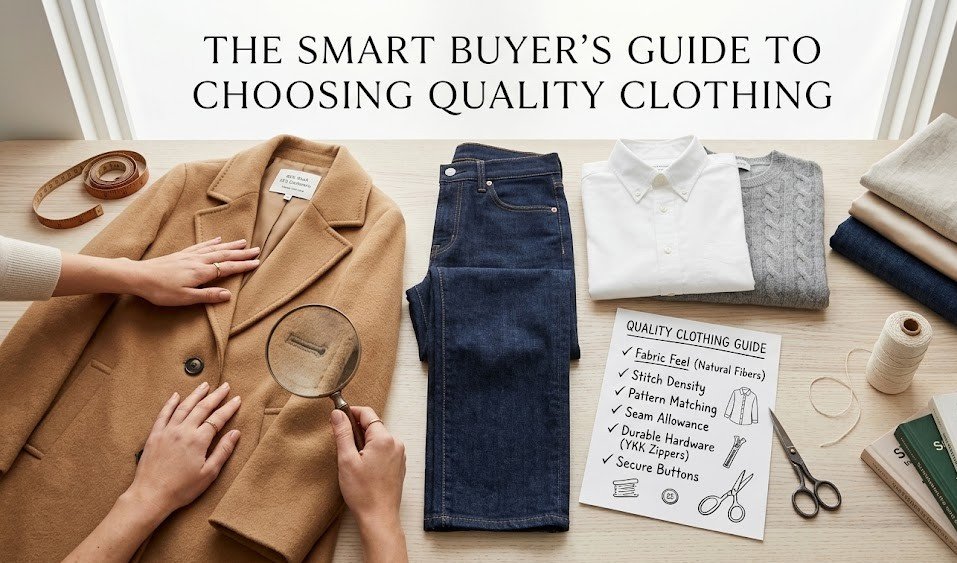
The secret to a great wardrobe isn’t a huge budget. It’s knowing how to spot high-quality products before you buy them. I’m talking about having “the eye.” You want to be the person who can walk into a store and immediately identify which pieces will last ten years and which will fall apart by Tuesday. I’ve spent years obsessing over garment construction so you don’t have to. Let’s dive into the gritty details of what makes a product actually worth your money.
1. The Fabric Burn and Touch Test
Natural vs. Synthetic
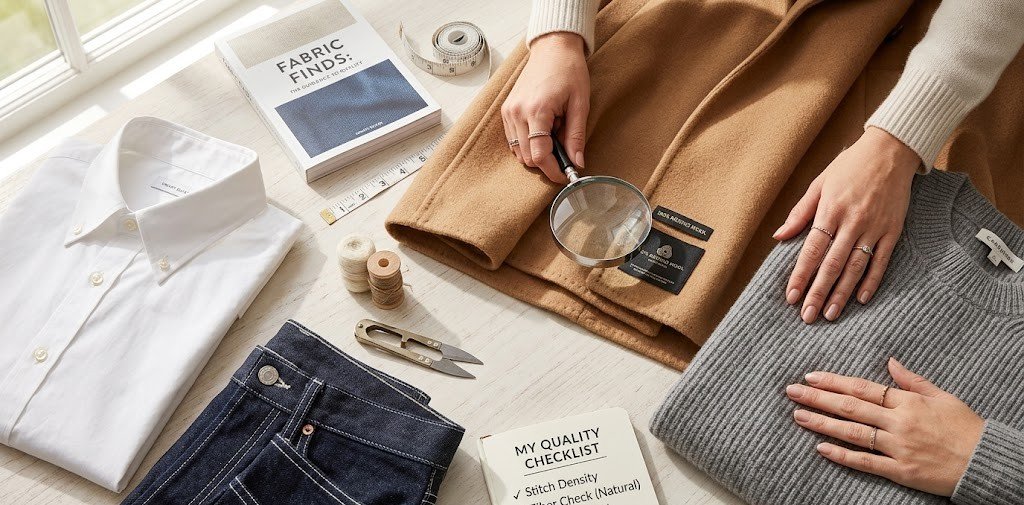
The very first thing you should do is check the composition tag. If you want to spot high-quality products before you buy, you need to favor natural fibers. We’re talking silk, wool, linen, and cotton. These materials are breathable and age with grace. Synthetic fibers like polyester or acrylic are essentially plastic. They trap heat, hold onto odors, and pill almost immediately.
The Hand Feel
Run your hand over the fabric. Does it feel “cool” and substantial? Or does it feel “clammily” smooth and thin? High-quality cotton should feel soft but have a certain crispness. Wool should feel springy, not scratchy. If a fabric feels “squeaky” when you rub it between your fingers, that’s a high concentration of synthetic material. Your skin will thank you for choosing the real deal.
2. Why Stitch Density is Your Best Friend
Counting the Threads
Turn the garment inside out. This is where the truth lives. To effectively spot high-quality products before you buy, look at the number of stitches per inch (SPI). A high-quality garment will have small, tight, frequent stitches. Why? Because more stitches create a stronger bond that won’t pop when you move.
The Loose Thread Red Flag
If you see loose threads, skipped stitches, or wobbly lines, put it back. Cheap manufacturers use long, loose stitches because they’re faster and use less thread. It’s a cost-cutting measure that results in seams that unravel after one wear. A clean, dense, straight stitch is the hallmark of a factory that actually cares about craftsmanship.
3. The Hardware Test: Zippers and Snaps
The YKK Standard
Don’t overlook the metal bits. Zippers are often the first thing to break. When you try to spot high-quality products before you buy, check the brand on the zipper pull. If you see “YKK,” you’re usually in good hands. They are the gold standard for durability. The zipper should glide smoothly without catching or feeling “sharp.”
Metal vs. Plastic
Buttons and snaps should feel heavy and cold to the touch. This indicates they are made of metal, wood, or bone rather than cheap, painted plastic. Plastic hardware chips and snaps under pressure. Metal hardware suggests the designer didn’t cut corners on the finishing touches. It’s a small detail that says a lot about the overall quality.
4. Checking the Lining and Internal Finishing
The Secret Inside
A lining isn’t just an extra layer. It protects the outer fabric from your body oils and helps the garment hang correctly. A well-lined coat or skirt is a primary way to spot high-quality products before you buy. The lining itself should be a breathable material like rayon, acetate, or silk not a sticky, non-breathable polyester.
French Seams and Binding
Look at the raw edges of the fabric inside. Are they just “surged” (that zig-zaggy thread finish)? Or are they encased in a French seam or a bias binding? Encased seams mean the fabric can’t fray. It’s a time-consuming process that you’ll only find in garments meant to last a lifetime.
5. Buttonhole Integrity and Shank Buttons
The Buttonhole Check
Look closely at the buttonholes. Are they messy with threads poking out? Or are they neatly bound with dense stitching? A poor buttonhole will stretch out and fray, eventually making it impossible to keep the garment closed. It’s a tiny detail that helps you spot high-quality products before you buy with total confidence.
The Shank Secret
On heavy coats or blazers, buttons should have a “shank” a little neck of thread or a metal loop that lifts the button slightly off the fabric. This prevents the fabric from pulling and puckering when you button it up. If the button is sewn flat and tight against a thick fabric, it will eventually pop off or tear the cloth.
6. The Transparency and Light Test
This is my favorite fitting room trick. Hold the fabric up to the light. If you can clearly see the outline of your hand through a fabric that isn’t supposed to be sheer, it’s low-density. This is vital when you want to spot high-quality products before you buy, especially with white tees or linen pants.
Density Equals Durability
Thin fabric doesn’t just mean it’s “lightweight” for summer. It often means the manufacturer used fewer threads to save money. These thin fabrics develop “micro-holes” near the belt line or underarms very quickly. A high-quality fabric should feel dense and opaque, even if it’s a summer-weight material.
7. Pattern Matching at the Seams
The Alignment Test
If you’re looking at stripes, plaids, or any repetitive print, look at the side seams. Do the patterns line up? This is a massive indicator of quality. Pattern matching requires more fabric and more careful cutting. Cheap brands skip this, resulting in stripes that look chaotic where they meet.
Attention to Detail
When a brand takes the time to align a plaid across a pocket or a side seam, it shows they aren’t rushing the process. It creates a much more expensive, polished look. If the patterns are a mismatched mess, it’s a sign the brand is prioritizing volume over value.
8. The Pull Test for Shape Retention
The Snap-Back Factor
Knits are tricky. To spot high-quality products before you buy, gently pull the fabric between your hands and let go. Does it snap back to its original shape instantly? Or does it stay slightly stretched and saggy? This is called “recovery.”
Avoiding the Baggy Look
If a sweater or jersey knit has poor recovery, you’ll end up with “baggy elbows” or a stretched-out neckline within hours. High-quality knits use longer fibers and better tension to ensure the garment keeps its silhouette through multiple wears and washes.
9. Odor and Chemical Residue Check
The Scent of Quality
This sounds weird, but give the garment a sniff. New clothes shouldn’t smell like a chemical factory. If there’s a strong, acrid, or “petroleum” smell, that’s a sign of heavy chemical processing or cheap synthetic dyes. This is an underrated way to spot high-quality products before you buy.
Skin Sensitivity
Those chemicals don’t always wash out easily. They can irritate your skin and often indicate that the fabric was treated to feel softer than it actually is. Natural, high-quality materials should smell neutral or slightly like the fiber itself (like the faint scent of wool).
10. Assessing the Weight and Drape
Gravity’s Role
Quality clothing often has a bit of “heft” to it. This doesn’t mean it’s heavy to wear, but the fabric has enough weight to drape beautifully over your curves rather than clinging to them. When you try to spot high-quality products before you buy, watch how the fabric moves in the mirror.
The Swish Factor
Does it flow with you? Or does it stiffen up and wrinkle awkwardly? A high-quality silk or wool will have a fluid drape. Cheap polyesters often have a “crispy” or “bouncy” movement that looks synthetic. The way a garment hangs on a hanger is usually a good preview of how it will behave on your body.
11. Brand Transparency and Origin Labels
Where and How
Check the “Made In” tag. While great clothes can come from anywhere, certain regions are famous for specific crafts. Italian leather, Japanese denim, or Scottish cashmere are often (though not always) safer bets. Beyond the location, check if the brand shares information about their factories.
The Story Behind the Stitch
Brands that are proud of their quality will usually tell you about it on their website. They’ll mention “long-staple cotton” or “full-grain leather.” If a brand’s marketing is all about the “vibe” and nothing about the “make,” be skeptical. Knowledge is your best tool to spot high-quality products before you buy.
12. Tailoring Potential and Seam Allowances
Room for Adjustment
Look at the extra fabric inside the seams. This is called the “seam allowance.” High-quality trousers and skirts usually have a generous allowance so they can be “let out” by a tailor if you change size. Cheap clothes have almost no extra fabric, meaning they can’t be adjusted.
The Hem Weight
Check the hem at the bottom of a dress or pants. Is it a tiny, narrow fold? Or is it a deep, 2-inch hem? A deep hem provides weight, which helps the garment hang straight. It also means you can lengthen the item if needed. This flexibility is a hallmark of a garment designed for a lifetime, not a season.
FAQ’s
Is expensive always better? Not necessarily! You’re often paying for a logo or a massive marketing budget. However, very cheap clothing is almost always low quality. The goal is to find the “sweet spot” where the price reflects the materials and labor, not the celebrity endorsement.
How do I check quality when shopping online? Read the fabric composition carefully. Zoom in on the photos to look at the stitching. Look for reviews that mention the “weight” of the fabric or how it held up after washing. If a brand doesn’t list the fabric details, don’t buy it.
Does “Dry Clean Only” mean it’s high quality? Not always. Sometimes it just means the manufacturer used cheap glues or unstable dyes that would ruin in a washing machine. However, delicate natural fibers like silk and structured wool blazers do usually require professional care to maintain their shape.
How can I tell if a sweater will pill? Look for “long-staple” wool or cashmere. Rub a small, inconspicuous area of the sweater against itself. If it starts to “fuzz” immediately, it will pill. Tightly knit sweaters pill much less than loose, fluffy ones.
What’s the best way to maintain high-quality clothes? Wash them less! Use cold water, mild detergents, and never, ever put your good natural fibers in a hot dryer. Air drying is the best way to preserve the elasticity and strength of the fibers.
Final Verdict on Quality Shopping
At the end of the day, your wardrobe is an investment in yourself. When you take the time to spot high-quality products before you buy them, you’re choosing to respect your budget and the environment. It’s about moving away from that frantic “more, more, more” mindset and into a grounded, stylish place of “better, better, better.”
Next time you’re in a fitting room, don’t just look at the silhouette. Turn it inside out. Tug the seams. Smell the fabric. You are the boss of your closet, and you have every right to be picky. After all, when you buy quality, you only have to buy it once. Happy hunting, and stay stylish!